Avro Canada and the NASA Canadians
Who Were the ‘NASA Canadians’ (Also called The Avro Group)?
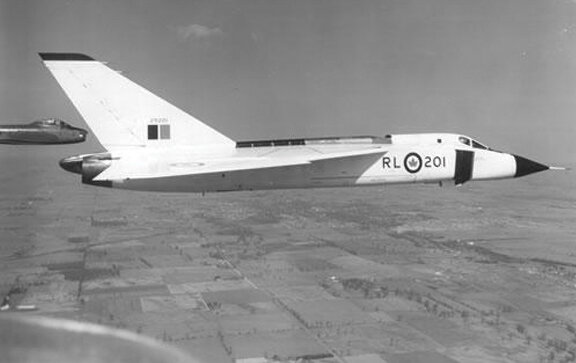
The “NASA Canadians” (also called the Avro Group or similar) were a group of roughly 25–32 engineers and specialists from Avro Canada (many Canadian-born, a significant portion British-born who had been working in Canada) who joined NASA’s Space Task Group in 1959 after the cancellation of the CF-105 Avro Arrow.
NASA (via Robert Gilruth and others) recruited them rapidly in March–April 1959 to bolster the understaffed team working on Project Mercury. About 25 accepted initial offers (with a few more joining later, bringing totals cited around 31–33). They arrived around April 9, 1959, at Langley Research Center and later contributed across Mercury, Gemini, and Apollo (and in some cases beyond, including early shuttle and space station work). Roughly half or more were of British origin per some accounts (historian Chris Gainor has noted about 19 British-origin in the broader group).
No single official public roster of all ~32 exists in easily accessible sources, but the following names are repeatedly documented across historical accounts, including Chris Gainor’s book Arrows to the Moon, museum/Ingenium articles, and contemporary reports. Roles noted where known:
Canadian-born
One detailed account identifies these 12 as born and raised in Canada among the initial 25 who accepted:
- Bruce Aikenhead — Flight simulation and astronaut training specialist (later returned to Canada and contributed to Canadian space efforts, including Canadarm-related work and the astronaut program).
- Richard (R.) Carley — Guidance and navigation systems (Mercury, Gemini, Apollo).
- Jim (James Arthur) Chamberlin — Former Chief Technical Designer for the Arrow who quickly rose to become the chief architect of Project Gemini. Avro chief of technical design; major leadership on Mercury engineering/production; key designer/project manager for Gemini; advocate for lunar orbit rendezvous; later Apollo troubleshooter. (Often described as the group’s leading figure.)
- Stanley Cohn
- Eugene Duret
- Bryan Erb — He focused on the spacecraft’s thermal protection systems, ultimately helping develop the critical heat shields used to keep astronauts alive during atmospheric entry.Aerodynamics/thermal analysis; ablation/heat shield work for Mercury and Apollo Command Module re-entry.
- Stanley Galezowski — Placed directly under Section Head Richard R. Carley. His unit was tasked with resolving the math modeling and stability loops required to guide space capsules safely back through the Earth’s atmosphere.
- Fred Matthews — Backup flight director; tracking stations and flight monitoring; contributed to Flight Controller/Mission Rules handbooks and Mission Control development.
- Owen Maynard — Became Chief of the Lunar Excursion Module (LEM) Engineering Office at NASA’s Manned Spacecraft Center, directly overseeing the design of the lunar lande. Key early work on lunar module concepts and design; systems engineering for Apollo; mission sequencing; strong advocate for lunar orbit rendezvous.
- Leonard Packham — Communications, tracking, and radar systems (Mercury–Apollo).
- Robert Vale
- George (A.) Watts
Other frequently named members of the Avro/NASA group (some British-origin)
- John Hodge — Former Avro aerodynamicist assigned directly as an assistant to Operations Chief Chuck Mathews. He later became NASA’s second official Flight Director (using the call sign “Blue Flight”).Original NASA flight director (Mercury, Gemini, Apollo; led the “Blue Team”); later involved in space station concepts.
- Tecwyn (“Tec” or “Tex”) Roberts — He joined the tracking teams and essentially invented the role of the Flight Dynamics Officer (FIDO), later designing the physical layout of the Mission Control Center in Houston. Trajectory group leadership in Mission Control; significant role in designing the Mission Control Center in Houston; credited in some accounts with popularizing “A-OK.”
- David D. Ewart:— Ewart worked extensively on Apollo re-entry simulations alongside Galezowski and later oversaw critical manufacturing contractors at North American Aviation following the formal transition of the programs. He served as resident manager of Skylab at McDonnell Douglas in Huntington Beach California. In 1973 he became Chief Systems engineer for the space shuttle program.
- Dennis Fielder — Mission Control and tracking network development (with Hodge, Roberts, Matthews).
- Peter Armitage — Recovery systems/procedures for Mercury; later lunar landing simulator work relevant to Apollo.
- Robert (Bob) Lindley — Avro chief engineer; went primarily to McDonnell (contractor) leading Gemini spacecraft work; later joined NASA in shuttle-related engineering/operations and Goddard roles.
- Mario Pesando — Avro project research; later Saturn V-related work (e.g., at RCA).
- Carl Lindow — Later Boeing work on Saturn stages.
Additional names appearing in research notes, searches for contacts, or related accounts of the broader Avro-to-U.S. space talent pool include: David N. Brown, Frank Chalmers, Jack N. Cohen, Thomas Chambers, Joseph Farbridge, George Harris, John K. Hughes, John Meson, Rod Rose, Leslie St. Leger, John Shoosmith, and others. Some went to contractors rather than direct NASA civil service roles.
The group provided practical large-scale aircraft/systems engineering experience that complemented NASA’s more research-oriented NACA heritage staff. They were described by Gilruth as a “godsend.” Their contributions helped accelerate Mercury, enable Gemini’s advances (including rendezvous techniques critical to Apollo), and support Apollo lunar module and operations work. Full details and biographies are best found in Chris Gainor’s Arrows to the Moon: Avro’s Engineers and the Space Race (Apogee Books, 2001), which is the primary dedicated history.